
Hyundai/Kia OEM vs Aftermarket Parts: 7 Checks Before Bulk Ordering
A lower unit price can hide a more expensive order for importers comparing Hyundai Kia OEM vs aftermarket parts. The component may be compatible with an alternative build of the engine or lack packaging for tracing purposes. A sound buying choice begins with the verifiable, not what the listing delivers. Not what the listing makes an effort to promise, but rather what is possible to check becomes a great purchasing decision.
At STARIA, sourcing work covers Hyundai/Kia components for repair and distribution channels, including braking, ignition, and filtration parts. Buyers should still confirm each item’s identity, application, and supporting documents before committing to volume. These seven checks lead from quotation to approval.
What Must Buyers Confirm Before Comparing OEM and Aftermarket Parts?
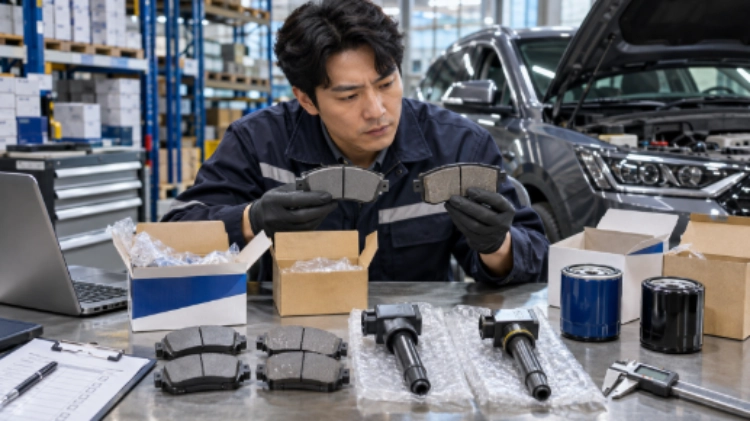
Two quotations are not comparable until they describe the same replacement requirement. For Hyundai Kia OEM vs aftermarket parts, begin with part classification and vehicle identity. This keeps price comparisons meaningful.
Check 1 — Genuine, OEM-Supplied, and Aftermarket Part Identification
A “true” part is provided through an authorized parts channel of a vehicle manufacturer. OEM stands for original equipment manufacturing, but just because an item comes packaged separately it isn’t always a genuine service part. An independent aftermarket part may use different material and manufacturing controls from OEM. When we say, “OE-quality,” even that is not an indication of what was officially authorized.
Request the supplier’s brand information, clear packaging photographs, and traceability records. A matching number printed on the box is not, by itself, proof of authenticity. For a fuller explanation of OEM and aftermarket terminology, see the related guide to OEM vs Aftermarket Hyundai/Kia Parts. For bulk purchasing, verify the part’s identity, supply channel, and documented origin before approval.
Check 2 — OE Number and Vehicle Fitment Verification
An OE number narrows a search; it does not replace a full fitment check. Record the vehicle model, production year, engine, drivetrain, destination market, and VIN where available. Check superseded numbers and position-specific variants.
If the product description does not establish the vehicle application, request written fitment confirmation from STARIA using the vehicle details and OE reference. Photographs of the removed part can also help identify connector, mounting, and dimensional differences before approving the replacement. In conjunction with application data, removed-part photographs can help distill connector differences. With application data, removed-part photographs can resolve connector disparities.
Which Hyundai/Kia Parts Require Stronger Quality Evidence?
Components have different modes of failure. The next two checkboxes moves the Hyundai Kia OEM vs aftermarket parts discussion out of a product-based view, where every part is an equivalent risk. The next two checks contextualize the Hyundai Kia OEM vs aftermarket parts as part of standard repair work rather than treating all products as an identical gamble.
Check 3 — Risk Assessment by Part Function
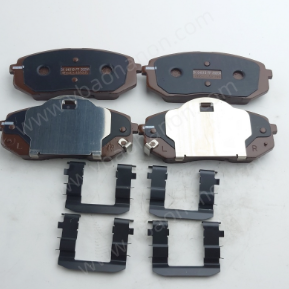
For example, brake pads are something that needs special consideration as friction behavior, heat, wear and fit is critical to the operation of braking. Because almost no one takes the necessary steps to prevent brake hardware from rattling, dirt or high spots on a rotor surface create vibrations when braking for which disc brakes are effectively damped. Instead of vague stopping-distance claims, demand evidence. Ask for proof and not unproven stopping-distance statements.
STARIA lists 58101-2SA70 PAD KIT-FRONT DISC BRAKE under brake systems, with a stated minimum order quantity of 10. Before adding it to stock, confirm axle application, dimensions, fitting hardware, and available test documentation.
In particular, the fact that these vehicles share a platform should not lead one to assume they also have interchangeable brake parts. You can read more about the cross-shopping checks in a separate guide to Kia vs Hyundai Brake Parts.
Check 4 — Material Specifications and Quality Test Evidence
Electrical parts require a different type of inspection. A coil must generate the voltage required, but its insulation has to take engine-compartment high heat — moisture and oil exposure is as given, of course with vibration. It is something that your insulation and seals matter but it cant be derived from a single product photograph. However, insulation materials and seals do not show up in a product photograph.
Also remember to include 27301-3E400 COIL ASSY-IGNITION when you plan an ignition-system order. For 27301-3E400, verify the OE reference, connector, mounting arrangement, and vehicle application. Request available electrical or functional-test records before approving a bulk order. Do not assume that visually similar ignition coils have identical electrical performance. Replacement units that may look near-identical can still generate a repeat fault due to poor matching.
How Can Importers Control Supplier and Purchasing Costs?
Even after you pass the first technical checks, there is purchasing risk. You should also analyse Hyundai Kia OEM vs aftermarket parts by the location of documented supply and how much it costs to make, stock ordered usable loss. Comparisons of documented supply origin for Hyundai Kia OEM vs aftermarket contents direct from the warehouse but also usability cost.
Check 5 — Supplier Origin, Packaging, and Batch Traceability
Ask who is supplying the goods, what identification appears on each unit, and how a disputed batch would be traced. A useful record links the purchase order, part number, shipment, and lot or batch identifier. Check whether packaging and labeling match the agreed sample.
While traceability is useful to investigate defects, you cannot prove that the SKU has passed a particular test as assuaged by certification. For the current certificate, only ask for it if it’s applicable and check issuer identity & scope; As for the larger production chain, check Which Company Produces Hyundai and Kia Spare Parts?.
Check 6 — Landed Cost, Packaging Quantity, and Return Expenses
Most important, compare the landed cost for Hyundai Kia OEM vs aftermarket parts per usable unit and not just based on quoted price. This also accounts for freight, import charges; processing/logistics costs conversion of stock and likely handling the outofspecification inventory. Return policy — Reasonable return terms explain what evidence is necessary, who has to approve a claim and how either replacement or credit for an ending of service process will be handled.
As an example, the item 26300-35505 FILTER ASSY—ENGINE OIL demonstrates this point. 40 pieces per carton, according to its published product listing. That’s important when you’re doing things like setting order multiples, allocating warehouse space and planning replenishment. On its own it does not prove the filter’s performance or fitment. Before volume planning check the size of seal, mounting details and vehicle application.
How Should Buyers Validate a Bulk Order Before Release?
A verified quotation is only a starting point. Before scaling Hyundai Kia OEM vs aftermarket parts orders, buyers need agreement on what an acceptable delivered product looks like.
Check 7 — Sample Approval and Repeat-Order Consistency
Requesting samples or a small first shipment when sourcing risk justifies it The sample must be compared with the specifications, labeling, connectors or dimensions and packaging approved. Maintain photographs with the consent record. For repeated shipments, confirm that the identification and batch documents remain unchanged as originally agreed. For repeated shipments, verify that the identification and batch papers agreed previously are still consistent.
Collect part number, shipment reference, defect description and pictures for complaints. For a return or warranty claim, agree in advance on the evidence required, who reviews the case, and whether an approved claim results in replacement or credit. Confirm the actual warranty and return conditions in writing before placing the order. However, buyers must agree on the actual warranty and return terms before buying. Continue to agree on the actual warranty and return terms before buying.
Purchase Approval Criteria for Three Different Part Categories
A practical approval sheet can separate the evidence needed for each line:
| Product | Main Buying Risk | Evidence to Request |
| 58101-2SA70 PAD KIT-FRONT DISC BRAKE | Brake fitment and friction-related complaints | Axle application, dimensions, relevant quality records |
| 27301-3E400 COIL ASSY-IGNITION | Electrical mismatch and repeat faults | Connector details, vehicle application, functional checks |
| 26300-35505 FILTER ASSY-ENGINE OIL | Wrong fit and inconsistent replenishment | Mounting and seal details, application, packing information |
This comparison keeps checks proportional to use. A routine filter order and a brake-system order may share a supplier, but they should not have identical acceptance criteria.
Where Can Buyers Get Reliable Parts Sourcing Support and a Quote?
The final step is communicating the requirements clearly enough for the supplier to assess them. Both supply types need clear requirements.
STARIA’s Hyundai/Kia Parts Matching and After-Sales Support
STARIA supplies brake-system parts, ignition components, and filters for Hyundai/Kia applications. For an effective fitment review, provide the OE reference, vehicle and engine details, destination market, and available product photographs. Agree in advance on the application, quality, and after-sales records that can be supplied. A confirmed application record is more useful than a blanket claim that OEM or aftermarket parts always last longer.
OE Number and Order Details for a STARIA Quotation
Prepare the OE number, vehicle and engine details, destination market, required quantity, and packaging preferences. Specify whether genuine-channel supply, aftermarket alternatives, or both are required. Include any documents required by your customers or local market.
Contact / Project Discussion
If an order includes mixed model years, unfamiliar OE revisions, or products with different inspection needs, send the part list and unresolved questions through the contact channel. Confirm which fitment, packaging, and quality records are available. A documented exchange is more useful than approving ambiguous items and correcting the order later.
FAQ
Q: Are aftermarket Hyundai/Kia parts always less reliable than OEM parts?
A: No. Reliability depends on the specific part, its manufacturing controls, correct application, and installation. Ask for evidence relevant to the component rather than assuming that either label guarantees performance.
Q: Is an OE number enough to confirm Hyundai/Kia part compatibility?
A: No. Confirm the number against the vehicle’s year, engine, market, and relevant configuration. Revisions and similar-looking components can require additional checks.
Q: What should importers check first when comparing Hyundai Kia OEM vs aftermarket parts for bulk orders?
A: Verify part identity and fitment first. Then review component-specific quality evidence, traceability, landed cost, sample approval, and agreed return conditions before releasing volume.