
Complete Guide to Oxygen Sensors: How Fine Ceramic Tech Boosts Fuel Efficiency
When a check engine light suddenly flashes on a dashboard, the underlying cause frequently traces back to the exhaust system. Modern vehicles rely on highly precise data from the exhaust to burn gasoline correctly. This specific requirement is exactly where Fine Ceramic Tech steps in to save money at the gas pump and keep cars out of the repair bay. Mechanics often share stories of tracking down a rough idle for hours, only to find a perfectly good component ruined by one bad tank of gas. Good materials prevent this headache entirely.
Finding a reliable supplier for these critical components makes a massive difference for any auto parts business. Operating as a comprehensive automotive parts supplier,STARIA deeply covers chassis parts, engine peripherals, wear parts, and climate control systems globally. Empowered by strong manufacturing bases and a vast supply chain network, the brand delivers original equipment quality components directly to the global aftermarket. You can click about us to read how strict engineering standards drive better vehicle performance across the world.
Introduction to Oxygen Sensors
Working Principle
The oxygen sensor operates much like a standard dry cell battery mounted directly on your car exhaust pipe. It features a specialized zirconium oxide element that functions similarly to an electrolyte. Under high heat and platinum catalysis, negatively charged oxygen ions gather on both the inner and outer surfaces of this zirconium sleeve. Because the outside atmosphere holds 21% oxygen and the internal exhaust gas holds much less, a significant concentration difference builds up. This distinct difference generates a specific potential difference or electrical electromotive force.
Functions of Oxygen Sensors
Once the sensor generates that voltage, it transmits a signal straight to the engine control unit. The computer processes this signal to accurately determine if the engine is running a rich or lean fuel mixture. The primary goal is to maintain the theoretical air-fuel ratio as close to 14.7:1 as possible. Keeping the ratio at this precise level helps the three-way catalytic converter reach its maximum conversion efficiency, successfully purifying hydrocarbons, carbon monoxide, and nitrogen oxides before they leave the tailpipe.
Fine Ceramic Tech in Oxygen Sensors
Extended Service Life
Standard components struggle to survive the extreme conditions inside an exhaust manifold. Applying Fine Ceramic Tech greatly improves the physical and chemical stability of the internal sensitive elements. An oxygen sensor only begins to reflect accurate characteristics and output a stable voltage when temperatures exceed 300°C. It reacts fastest to mixture changes at around 800°C. Fine Ceramic Tech provides the necessary mechanical strength and heat resistance to survive these massive temperature swings day after day, significantly extending the service life of the product.
Anti-Poisoning Protective Layer
Drivers occasionally fill their tanks with low-quality gasoline containing heavy impurities. To combat this real-world issue, engineers implement a strict manufacturing process combined with an anti-poisoning protective layer. This specific protective layer effectively prolongs the tolerance time to inferior oil products. Instead of breaking down quickly from sulfide exposure, the sensitive elements remain shielded, maintaining stable signal output for thousands of extra miles.
The Impact on Fuel Efficiency
Accurate Air-Fuel Ratio Control
When your vehicle lacks sufficient oxygen in the exhaust, it means the engine burns a rich mixture. The sensor reacts by sending a high voltage signal between 0.6 and 1V to the computer. Conversely, a low voltage near 0 volts tells the ECU the mixture is too lean.
| Exhaust Condition | Oxygen Concentration | Sensor Voltage Output | ECU Action |
|---|---|---|---|
| Rich Mixture | Low | 0.6 to 1V | Dilutes fuel injection |
| Lean Mixture | High | ~ 0V | Enriches fuel injection |
Based on this continuous feedback loop shown in the table above, the computer dilutes or enriches the fuel injection duration instantaneously. This rapid adjustment completely prevents wasted fuel.
Reduced Exhaust Emissions
Proper fuel metering goes hand in hand with environmental protection. Without precise data from the exhaust, the three-way catalytic converter fails to operate correctly. By keeping the air-fuel ratio tightly controlled, the system successfully reduces carbon monoxide, hydrocarbons, and nitrogen oxides. You get a cleaner burn, which translates directly to better gas mileage and a significantly smaller carbon footprint.
Signs of a Failing Oxygen Sensor
Decreased Fuel Efficiency
A degraded unit sends sluggish or completely false signals to the engine management system. The computer might mistakenly assume the engine runs too lean and command the injectors to flood the cylinders with excess gasoline. You will notice a sharp drop in your fuel economy and frequent trips to the gas station. A failed sensor often illuminates a fault light on your dashboard, serving as your first clear warning sign that emissions control is compromised.
Rough Engine Idle and Stalling
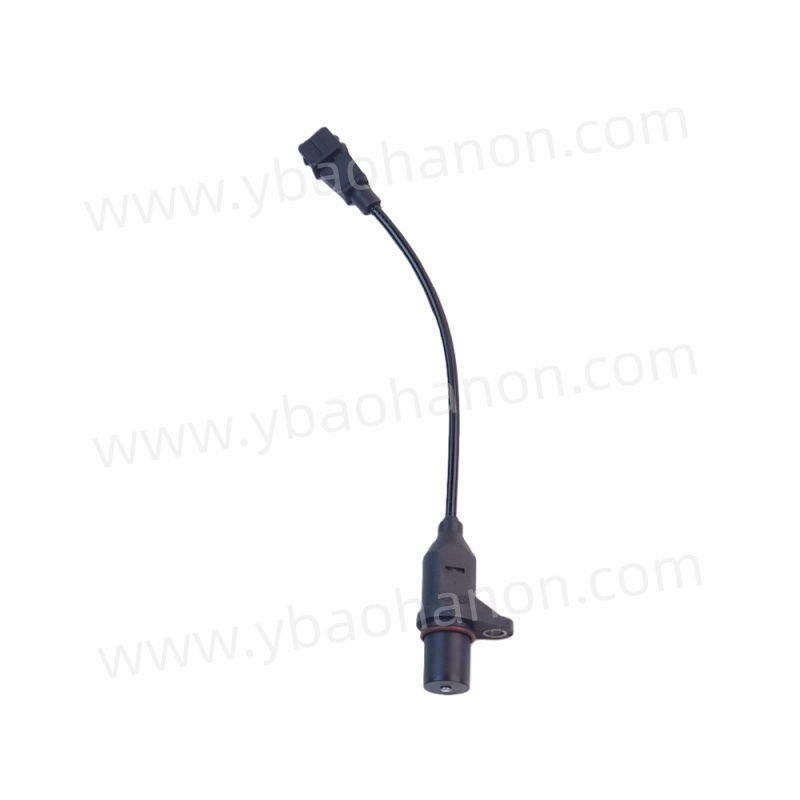
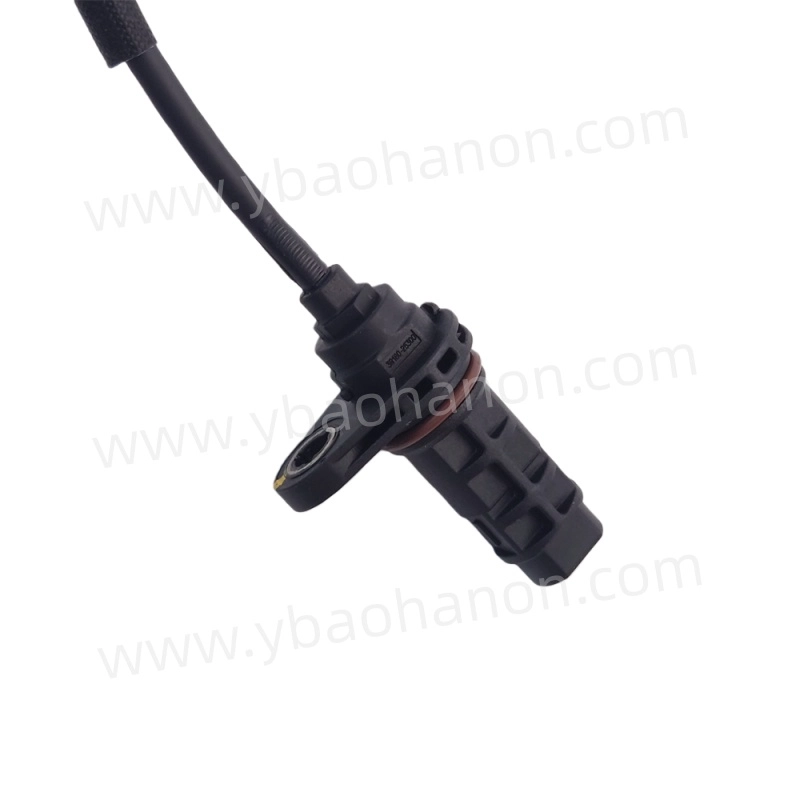
Bad data from the exhaust disrupts the combustion cycle, leading to engine shaking, misfires, or sudden stalling. It is important to note that stalling is not always an exhaust issue. Sometimes the problem originates at the engine block. For example, if your crankshaft position sensor breaks, the engine computer cannot confirm the crankshaft angle of rotation. To protect the engine, it simply stops spraying fuel and will not ignite. If you diagnose a timing issue rather than an exhaust problem, replacing the faulty part with a 39180-26900 or a 39180-25300 magnetic induction sensor provides a highly durable and temperature-resistant fix.
Quality Manufacturing and Testing
Fully Automatic Production Lines
Building reliable automotive components demands absolute precision. All sensors from the brand roll off fully automatic production lines. This automation eliminates human error during assembly. Advanced laser welding technology bonds the electrode and the ceramic body together seamlessly, keeping the margin of error strictly controlled to $\pm$ 0.01mm.
One Hundred Percent End-of-Line Testing
You never want to install a part only to find it is dead out of the box. Every single sensor undergoes strict 100% offline testing before leaving the factory.
| Test Category | Parameter | Standard Met |
|---|---|---|
| Signal Response | Response Time | ≤300ms |
| Voltage Accuracy | Output Variance | ≤0.05V |
| Corrosion Resistance | Salt Spray Test | 240 hours |
| Durability | High-Frequency Vibration | 100,000 cycles |
As detailed in the testing metrics above, the laboratory subjects the units to 240 hours of salt spray corrosion testing and simulates 100,000 cycles of high-frequency engine vibration to guarantee reliable performance.
Partner with STARIA for Automotive Solutions
Comprehensive Solution Center
Sourcing replacement parts online comes with the risk of counterfeit goods or cataloging misinformation. You need a trusted partner who accurately categorizes products for the global aftermarket. We invite you to visit our Solution Center to review detailed sub-industry analysis and find exact OEM-matched components for Hyundai, KIA, and other major vehicle brands.
Expert Support and Service
We back our Fine Ceramic Tech engineering with a complete set of marketing and after-sales services. If you face challenges with parts matching or bulk ordering, our technical support team delivers fast, point-to-point assistance. Please contact us directly to speak with our specialists and upgrade your inventory with reliable, high-margin automotive parts.
FAQs
Q: How does Fine Ceramic Tech improve oxygen sensors?
A: Fine Ceramic Tech increases the mechanical strength and thermal stability of the internal sensitive elements. It allows the sensor to withstand extreme exhaust temperatures up to 800°C while maintaining highly accurate voltage outputs without degrading quickly.
Q: What voltage does an oxygen sensor output when the fuel mixture is rich?
A: When the mixture is rich, meaning there is very little oxygen in the exhaust gas, the sensor generates a high voltage signal ranging between 0.6 and 1V.
Q: Why does my car stall if the crankshaft position sensor is broken?
A: The engine computer relies on the crankshaft position sensor to determine the exact position and speed of the engine block components. If the sensor breaks, the computer cannot calculate the timing, so it protects the engine by completely stopping all fuel injection and ignition.