
Choosing the Right OE Replacement Pad: A Ceramic vs Semi Metallic Brake Pads Guide

When servicing a vehicle’s braking system, choosing the correct Original Equipment (OE) spec replacement brake pads is crucial to ensuring safety, performance and delivering a great customer experience. Between Ceramic and Semi Metallic materials, there are clear choices to make and the consequences of getting it wrong will be to impact the comfort of driving, braking performance and maintenance costs on both owner driver and commercial fleets.
To solve this purchasing dilemma, STARIA steps in as a leading global automotive parts supplier, backed by an extensive manufacturing network and a rich history of deep market cultivation. STARIA delivers OE-level quality to the aftermarket, providing you with highly reliable and cost-effective solutions. This guide will break down the precise differences between these friction materials, helping you make the most informed decision for your vehicle maintenance or auto parts wholesale business.
The Core Elements: Ceramic vs Semi Metallic Materials
To make a smart purchasing choice, you must first look at the raw materials that generate the stopping power.
Semi Metallic Brake Pad Characteristics
Traditional semi-metallic pads use metal fibers—such as steel, iron, or copper—as the primary friction material. These metal-heavy compounds provide a strong initial bite and robust stopping power. However, this metallic composition makes them highly abrasive. Cheap metallic friction compounds often possess an unstable friction coefficient. Because disc brakes operate with a tiny clearance of just 0.05 to 0.15 millimeters, any material swelling or heavy debris can cause the pad to drag. This constant dragging severely scratches the rotors, causes loss of control, and creates loud squealing noises during daily commutes.
Ceramic Brake Pad Properties
Ceramic components do not contain any traditional metal fibers. Instead they are made with advanced materials such as ceramic fibers, large-grain graphite, and aramid fibers of aramid mixed with the most advanced resins. Aramid fibers are very strong and light. The combination of the materials increases the structural toughness of the pad significantly, so that it does not break, crack or distort under heavy physical stress such as in sudden braking. Prior to assembly of the component into the vehicle the friction material must have sufficient mechanical strength to withstand drilling and mechanical processing, which are required for the material. The ceramic formulas are very suitable for such manufacturing requirements.
Performance Under Extreme Driving Conditions
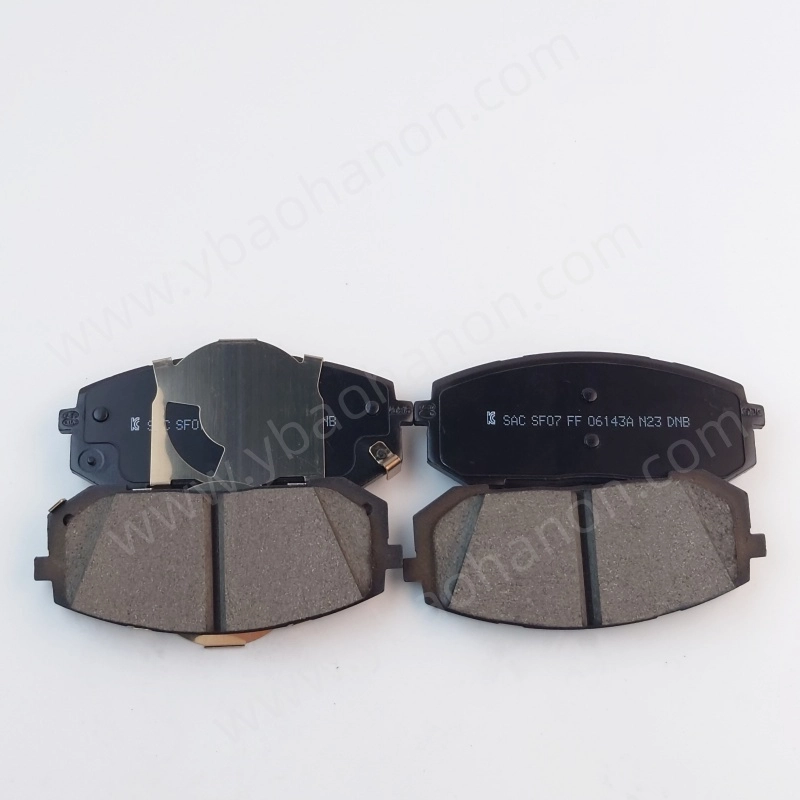
When evaluating Ceramic vs Semi Metallic performance under extreme heat, the differences in physical stability become glaringly obvious.
Thermal Stability and Heat Dissipation
When driving down steep mountain roads or towing vehicles, repeated braking brings vehicle components to extreme temperatures. But these temperatures are no problem for Ceramic materials as they are suitable for long term operation up to 1000°C and peak operation up to 600°C. This means that heat that is produced in braking is transferred very quickly by Ceramic brake pads and thus also cooled very quickly. This means that there is no risk of damage by heat on surrounding components of the caliper. This is in contrast to metal brake pads which are also conductive. However they can deform in high temperatures and stick to the cast iron surfaces of brake rotors.
High-Speed Friction Consistency
When you stop a car from a high speed—dropping from hundreds of kilometers per hour down to zero—the system transfers immense kinetic energy into heat energy. Standard materials experience a dangerous phenomenon called thermal decay. The internal resin softens, dropping the friction coefficient significantly, which means the pedal feels soft and the car takes much longer to stop. Because of their specialized formula, ceramic pads maintain a highly stable friction layer at extreme temperatures. The friction coefficient stays steady around 0.45 to 0.55 even when the rotor hits 650°C, preventing sudden braking failures and keeping you in total control.
Impact on Driving Comfort and Vehicle Aesthetics
The everyday driving experience relies heavily on how quiet and clean the braking system remains over thousands of kilometers.
Noise Reduction Mechanisms
Drivers despise squeaky brakes. Noise usually comes from abnormal metal-on-metal scraping between the friction pad and the iron disc. Since ceramic products lack raw metal chunks, they eliminate this harsh grinding sound at the source, operating well below the noise limits set by car manufacturers. High-quality options also feature multi-layer composite silencers. These shims absorb the tiny vibrations that human ears register as high-pitched squeals—usually those exceeding 800 Hz—delivering a much quieter, more comfortable cabin experience.
Brake Dust Accumulation Levels
Traditional metallic friction materials create a lot of black dust that embeds into the face of alloy wheels through static. This creates an unsightly mark and results in huge amounts of time spent cleaning. Newer ceramic formulas are made up of a very small percentage of ‘dusty’ powder that creates static, the vast majority of the material used in ceramic friction materials is non-static in nature and therefore does not create the same problems as metallic materials. What little dust the ceramic material does create can be washed away by rain or simply blows away in the air as the car is driven, meaning the wheels stay clean and save a huge amount of time for future cleaning and protection.
Longevity and Overall Cost Effectiveness
The financial difference between Ceramic vs Semi Metallic becomes obvious when you calculate the total cost of ownership over a few years.
Brake Pad Service Life
Every replacement costs money in both parts and labor. Ordinary semi-metallic components typically burn out before reaching 60,000 kilometers. In contrast, a premium ceramic product extends that lifespan drastically. Thanks to superior wear resistance and a stable friction coefficient, ceramic pads often surpass the 100,000-kilometer mark. This means ceramic materials last roughly 50% longer than their metallic counterparts, making them a far more economical investment for any vehicle owner.
Rotor Wear and Protection
The friction pad and the rotor work as an interdependent pair. The brake pad’s working surface area is only 12% to 6% of the brake disc area, meaning wear is highly concentrated. Aggressive metallic materials cut deep grooves into cast iron rotors, forcing you to replace both parts simultaneously. Ceramic compounds treat the rotor gently. They leave a smooth transfer film on the disc, avoiding deep scratches entirely. This protective trait actually extends the life of the original brake rotor by 20%, saving significant cash over the vehicle’s lifespan.
|
Feature |
Premium Ceramic Pads |
Standard Semi-Metallic Pads |
|
Average Lifespan |
Over 100,000 km |
Under 60,000 km |
|
Friction Consistency |
Stable up to 650°C |
Drops significantly at high heat |
|
Dust Accumulation |
Very Low (Static-free) |
High (Black dust deposits) |
|
Rotor Impact |
Extends rotor life by 20% |
Scratches and accelerates wear |
Making the Right OE Replacement Decision
Upgrading your catalog with the right Ceramic vs Semi Metallic solutions requires a focus on safety metrics and premium manufacturing.
Vehicle Safety and Braking Distance
Safety remains the ultimate metric for any automotive component. You need parts that deliver maximum clamping force at the exact moment you press the pedal. Ceramic pads provide faster overall responsiveness than traditional systems, shrinking the total stopping distance considerably. Whether you navigate slippery rainy streets or twisty mountain passes, this thermal and friction stability gives you absolute control over the vehicle, allowing the driver to stop with confidence.
Premium Product Recommendations
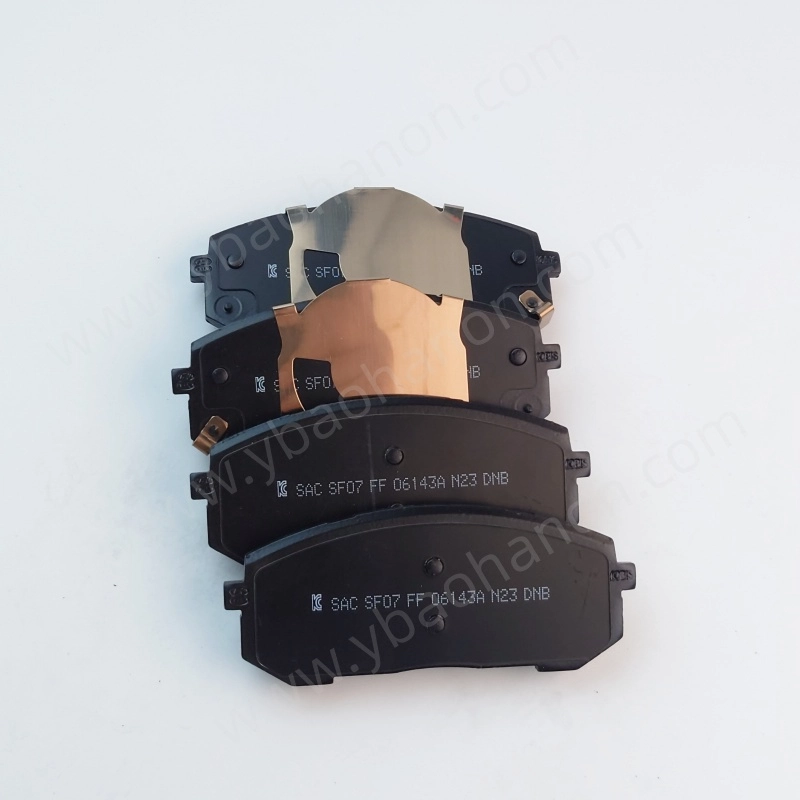 When weighing Ceramic vs Semi Metallic options for your inventory, you want products that balance safety, cleanliness, and price. We highly recommend the 58101-L1A02 PADKIT-FRONTDISCB as the ideal solution. It utilizes an eco-friendly ceramic formula that produces minimal dust and completely removes harsh braking vibrations. Built with strict processing controls, this product matches OE quality, protecting the rotor from heat deformation while delivering a highly responsive, comfortable pedal feel.
Upgrade Your Braking System With STARIA Solutions
Partnering with a proven manufacturer makes the Ceramic vs Semi Metallic decision much easier, giving you access to top-tier components without the middleman markup.
Comprehensive Auto Parts Supply
Sourcing high-quality parts online requires a trustworthy partner to avoid counterfeit or substandard goods. As a direct-to-market manufacturer, STARIA removes the middleman to lower your procurement costs. Discover the full scope of our factory capabilities, our Class 1000 dust-free workshops, and our rigorous quality checks by exploring our About Us background. If you manage a larger fleet or retail network, visit our Solution Center to find an extensive catalog of chassis components, engine parts, and advanced friction materials tailored to your specific market demands.
Professional Service and Contact
Every order comes with a strict life-cycle quality commitment. We provide rigorous 100% end-of-line testing and point-to-point customer support to keep your business running smoothly without interruptions. Ready to stock safer, quieter, and more durable brake parts? Get in touch with our team of specialists today. Visit our Contact channel to request a customized wholesale quote, secure expert technical support, and elevate your auto parts business to the next level.
|
Quality Control Step |
Standard Executed |
Benefit to Buyer |
|
Raw Material Check |
Spectrometer analysis of material strength |
Prevents base material failure in extreme heat |
|
Precision Manufacturing |
Laser welding with ±0.01mm error control |
Guarantees exact OE fitment during installation |
|
Environmental Testing |
240-hour salt spray corrosion test |
Delivers rust-free performance in harsh weather |
|
Finished Product Test |
100% end-of-line dynamic calibration |
Eliminates batch errors and prevents customer returns |
FAQ
Q: In the Ceramic vs Semi Metallic debate, which one actually lasts longer?
A: Ceramic components have a much longer lifespan than their metallic counterparts. Semi-metallic brake pads have a typical lifespan of up to 60,000 km, whilst high quality brake pads made from ceramic can last over 100,000 km depending on your normal usage.
Q: Why do my newly installed front brake pads make a squealing sound?
A: Cheap metallic friction materials scrape against the iron rotor and cause a squealing noise. The squealing can be removed by replacing the friction material with a ceramic pad combined with a multi-layer silencer shim.
Q: Do low-dust brake pads really keep my wheels clean?
A: Yes. Most brake pads on the market are made with metallic fibers that create a black statically charged dust that sticks very badly to your rim. Low-dust ceramic brake pad formulas use non-static powders that disperse in the air and blow away in a few minutes, keeping your alloy wheels clean and saving you a lot of time for cleaning.