
Ceramic vs Semi Metallic Brake Pads for Long PadA Life: Which Saves More Over Time?
When buyers start weighing Ceramic vs Semi Metallic brake pads, the immediate stopping bite on day one is rarely the biggest headache. The real money drain is what happens six or twelve months down the line. Mechanics and regional parts distributors absolutely hate comebacks. They want a friction material that keeps a solid pedal feel, avoids annoying customer complaints, and actually lowers the total replacement cost over the lifespan of the car.
That is exactly where STARIA steps in. They supply Hyundai-Kia automotive parts straight to aftermarket buyers who genuinely care about correct fitment, reliable warehouse stock, and actual support after the invoice is paid. When you need brake pads that match exact front and rear axle specs, rather than just guessing from a confusing catalog page.
Why Pad Life Crushes Upfront Price
Brake pads are physically pretty small, sure. But picking cheap ones can blow up a repair bill fast. If the friction material burns up too early, cakes the rims in thick black dust, or heavily scores the brake disc, that initial “budget” order suddenly turns into a massive headache. For wholesale workshops and repair chains, a box of pads sitting on a rack represents expensive mechanic labor, driver trust, warranty claim hassles, and future repeat business.
You really have to look at brake parts as a full-package expense. A longer-lasting pad keeps the car out of the bay longer. A clean, quiet setup drastically cuts down on angry phone calls from drivers. If a harsh pad aggressively chews into the rotor metal, the owner ends up needing new brake discs way ahead of schedule. That changes the financial math in a hurry.
Picture a daily commuter stuck in heavy city traffic. They do not need race-track stopping power, but constant stop-and-go driving and creeping forward at red lights will totally destroy a low-tier pad. Drivers notice high-pitched squeals and a mushy pedal long before they ever think to ask a shop about friction compounds.
Front and Rear Wear Balance
Front and rear brakes just do not handle the same workload. The front pads take a massive beating since the entire weight of the vehicle dives forward during a hard stop. However, the rear pads still play a huge role in keeping the car stable and providing a smooth stop. If a mechanic just slaps new pads on the front and completely ignores worn-out rear ones, the whole car will still feel totally off.
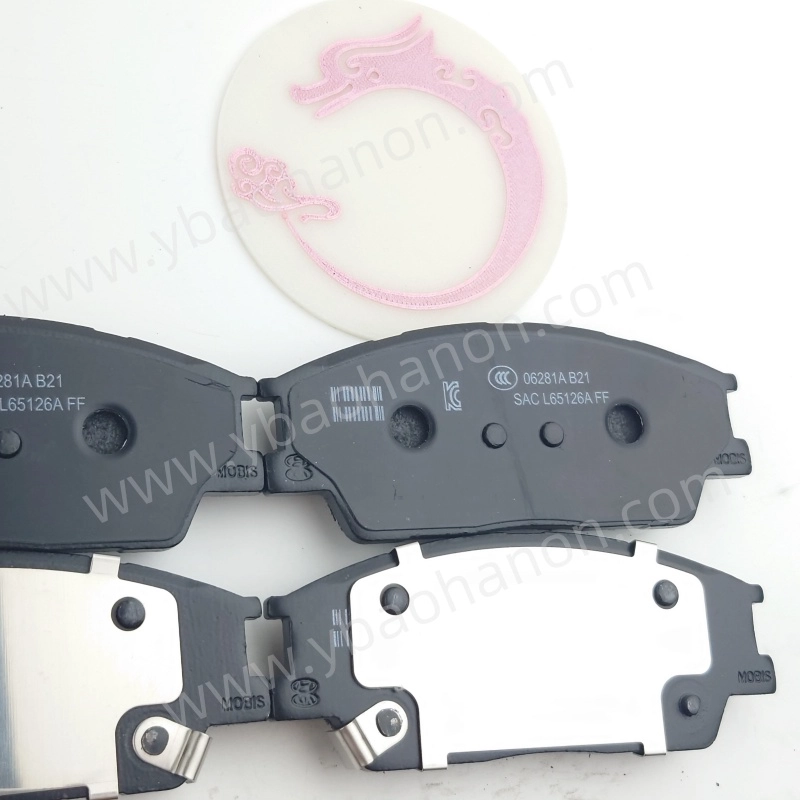
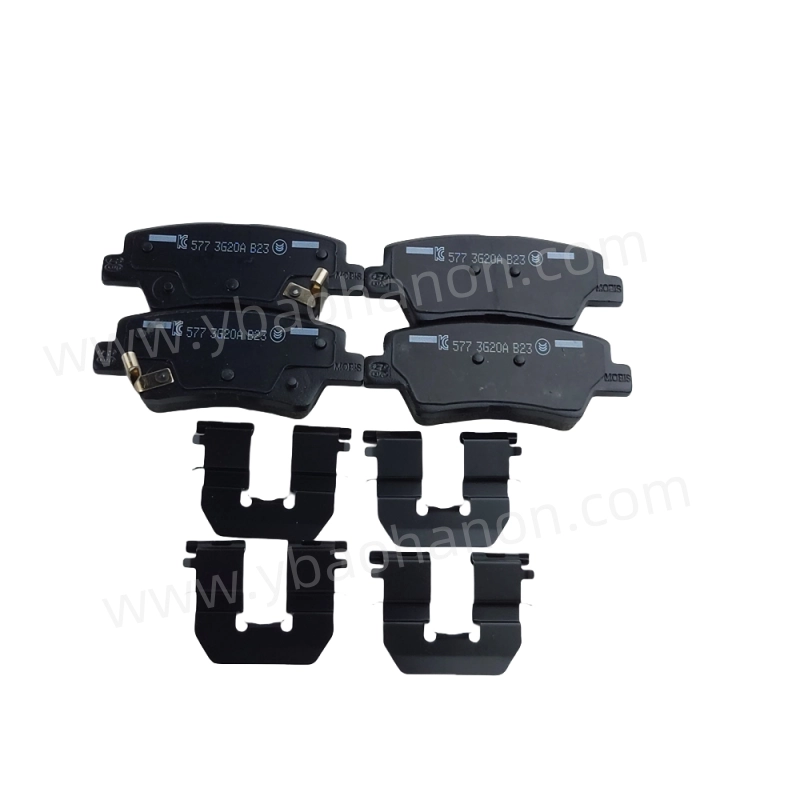
For guys handling Hyundai-Kia repairs, STARIA provides extremely clear part numbers. You can grab the 58101-K2A00 PAD KIT-FRONT DISC BRAKE when turning wrenches on the front end. On the flip side, the 58302-D4A50 PAD KIT-REAR DISC BRAKE gives you exactly what you need for the back wheels. Planning your shop inventory around specific positions wipes out a ton of messy guesswork and stops the amateur mistake of treating every single brake part like it is interchangeable.
How Ceramic vs Semi Metallic Choice Affects Pad Life
The physical material directly changes how fast the pad wears down, how much it chews the rotor, the noise level, and how it survives extreme heat. A fleet delivery van and a regular family sedan need totally different behaviors. You just need to figure out how hard the car is driven, pick the right material, and lock down the exact part number.
Ceramic Pad Life and Comfort
People usually buy ceramic pads because they want a quiet ride, way less dust, a nice smooth pedal, and a long service life for regular street driving. Industry reference data points out these materials keep friction levels stable and last a surprisingly long time. Ordinary metallic mixes might burn out before 60,000 km, while ceramic options often push past the 100,000 km mark if the driving conditions are right.
Obviously, you cannot promise those exact numbers to every driver who walks in the door. Stuck caliper slide pins, a warped rotor, or a sloppy installation job will completely ruin the final mileage. But it points you in the right direction. If your clients are suburban commuters who hate scrubbing dark dust off their expensive alloy wheels, ceramic makes total sense.
Semi Metallic Strength and Trade-Offs
Semi metallic pads pack in lots of metal fibers for an aggressive bite and serious heat management. They fit perfectly with heavy-duty use, loaded work trucks, or drivers who prefer a very stiff, responsive pedal. The major catch here is that these metallic formulas naturally make more noise, spit out visible rust-colored dust, and scrape away at the rotor faster. You see this heavily during the initial break-in period or on freezing wet mornings.
They are not bad parts at all. You just cannot blindly sell them as the ultimate long-life fix for every single car. If a vehicle just putters around neighborhood streets, a super aggressive pad is going to generate complaints. But if that same car tows a trailer or tackles steep mountain roads, managing heat becomes the absolute top priority.
Quick Comparison Reference
|
Buying Factor |
Ceramic Brake Pads |
Semi Metallic Brake Pads |
What It Means for You |
|
Service Life Data |
Stated at more than 100,000 km in general reference files |
Ordinary mixes often fall short of 60,000 km |
Ceramic lowers the amount of repeat replacements for regular street use |
|
Rotor Impact |
May extend original brake disc life by roughly 20% |
Metal content generally increases disc wear |
Rotor replacement costs should factor into initial price planning |
|
Dust Level |
Much lower dust and minimal wheel staining |
Typically creates a lot more visible dust |
Ceramic options greatly reduce complaints about dirty wheels |
|
Noise Tendency |
Usually very quiet under normal street driving |
Might be noisier, especially during the initial bedding phase |
Always match the material to what the driver expects for comfort |
|
Heat Behavior |
Friction remains stable at high daily temperatures |
Incredible bite and heat response, though comfort takes a hit |
The actual driving load has to dictate the final choice |
Which Material Actually Saves Money?
Hitting that long pad life target depends entirely on the specific car, the person behind the wheel, the local roads, and the mechanic doing the labor. Even a premium pad falls apart prematurely if the rotor surface is badly scored or somebody hammered the wrong shape into the mounting bracket.
City Driving and Daily Commuting
When stuck in heavy traffic, the best long-term value usually comes from something that stays quiet, keeps rims clean, and wears down completely flat. When looking at a Ceramic vs Semi Metallic choice for a daily commuter, ceramic pads often tell a much better financial story. They wipe out all those hidden soft costs that warehouse buyers forget about, like the time wasted doing free noise checks or managing angry warranty returns.
A customer might happily pay a few bucks more upfront for a premium box, but they will totally lose their mind if the car squeals like a pig every morning backing out of the driveway. Getting a part that actually fits the caliper perfectly comes first.
Highway Loads and Heat Control
Cruising on the highway is a completely different ballgame. Riding the brakes down long hills and packing the car full of luggage pumps massive amounts of heat into the calipers. The physical gap between the spinning disc and the pad is incredibly tight, usually hanging around 0.05 to 0.15 mm, which helps the system react almost instantly.
Under these heavy conditions, you really have to inspect the entire brake setup. Nasty brake fluid, thin rotors, and rusty calipers change the stopping distance. Semi metallic parts might easily win out here because they grab hard initially and survive extreme heat. But a long lifespan is never just about the pad itself. The entire corner of the car has to be healthy.
What Should Buyers Check Before Ordering?
Buying wholesale parts online definitely speeds things up, but it makes screwing up an order incredibly easy. A lot of platforms just list items by basic model names, which is a massive gamble. A purchasing manager might order a pad that looks identical in the photo, only to unbox a part that does not fit. That mistake eats up expensive freight shipping and wastes the mechanic’s morning.
OE Number and Vehicle Fitment
The very first thing you need to check is the factory OE number. Just knowing the car name is never going to cut it. You have to nail down whether it is for the front or back, identify the caliper style, and run the cross-reference numbers. The STARIA’s profile clearly points out their role as a dedicated Hyundai-Kia automotive parts supplier. That specific focus takes away the headache when trying to source Korean vehicle setups.
When weighing Ceramic vs Semi Metallic options, never let the debate over materials distract you from basic fitment. A proper order starts with the OE number, then you figure out the material, check stock levels, and review the packaging.
Packaging, MOQ, and Supply Consistency
People buying in bulk need boxes that look exactly the same every time, clear carton data, and a sales rep who actually answers questions. The official product page for the 58101-K2A00 clearly lists the part as a front disc brake pad kit designed for HYUNDAI KIA MOBIS applications, requiring a minimum order quantity (MOQ) of 10. The official page for the 58302-D4A50 shows it as a rear disc brake pad kit for the braking system, conveniently boxed up with 10 pieces per carton.
Which STARIA Brake Pad Kits Fit Front and Rear Needs?
Trying to get the most miles out of a brake job works a lot better when you evaluate both axles at the exact same time. Lots of guys just look up the front numbers, place the order, and then realize two days later that the rear parts are delayed. Keeping front and rear data linked makes your catalog a breeze to navigate.
58101-K2A00 Front Disc Brake Pad Kit
Grabbing the STARIA 58101-K2A00 PAD KIT-FRONT DISC BRAKE is a totally solid move when you desperately need a reliable front-end reference for Hyundai-Kia applications. You simply cannot just type “front pads” on a commercial purchase order. You have to write down the full string. Locking down a solid front option drops your noise claims down to zero and stops you from doing the labor twice for free.
58302-D4A50 Rear Disc Brake Pad Kit
The STARIA 58302-D4A50 PAD KIT-REAR DISC BRAKE perfectly handles the back end of the braking system. The rear ones might not burn out as fast as the front ones on most commuter cars, but they still dictate the overall balance and change how the parking brake feels on certain setups.
If a shop wants to do a complete four-wheel brake service, linking the front and rear part numbers together makes the whole afternoon run smoother. You can also bounce questions off STARIA regarding matching parts and shipping times before you wire money for a bulk container. That tiny bit of extra communication prevents a massive nightmare later on.
Why Source Long-Life Brake Pads from STARIA?
The biggest cash savings are not always found by arguing over friction material. Sometimes you save the most money simply by making fewer dumb ordering mistakes, having boxes ready on the shelf, and getting a straight answer when a mechanic asks if a part will fit. The Ceramic vs Semi Metallic debate absolutely needs to happen, but you also desperately need correct part numbers, boxes that do not fall apart, and a factory that actually cares.
By centering their whole operation around Hyundai-Kia parts, STARIA makes life considerably easier for folks trying to build out a catalog for local garages. Running YBAOH as a core piece of their brand system allows them to help guys who need heavy coverage on Korean cars. This means your purchasing guys can talk about specific stuff like the 58101-K2A00 and 58302-D4A50 with a crew that already knows these cars inside and out. You can simply contact STARIA for fitment checks, service support, and detailed quotation documents.
FAQ
Is the material choice the only thing that dictates pad life?
No, it is definitely not the only factor. The weight of the car, how aggressive the driver is, nasty rotor scoring, sticky slide pins, the local weather, and how well the mechanic lubricated everything all change the final mileage. You have to match the compound to the driving style and double-check the OE numbers before paying.
Do I have to swap out the front and back pads on the same day?
Not always. The fronts do most of the work and burn up much faster, but the rears still handle a lot of the balance and pedal stiffness. A mechanic needs to pull the wheels off both ends, measure the thickness with a gauge, and see if the rears are actually near the wear limit before blindly ordering replacement parts.
Why bother asking STARIA before placing a massive bulk order for Hyundai-Kia parts?
They help you verify all the annoying details like exact part numbers, front versus rear matching, specific chassis applications, minimum quantities, box sizes, and warranty backup. Doing this significantly drops your chances of importing a container full of wrong parts and makes buying Korean replacement systems a whole lot less stressful.