

Principales signos de que la manguera de radiador de su Hyundai (OEM 25411-1E000) está fallando y a qué modelos se ajusta
Mantener un coche en buena forma requiere vigilar cuidadosamente las piezas pequeñas, principalmente en la configuración de refrigeración. Si pasa por alto una pieza básica de goma como la manguera del radiador, podría enfrentarse a una avería importante del motor. Esta visión general indica cuándo cambiarlo y le ayuda a elegir el partido adecuado para su viaje.

Conoce a tu socio de confianza en la confiabilidad de la refrigeración
Antes de entrar en las claras pistas de problemas, ayuda a aprender sobre el grupo que respalda su coche’ larga vida desde el fondo. Al elegir piezas clave del motor, quieres un compañero de equipo que combine la fabricación exacta con un sólido conocimiento del control del calor del coche. YBAOH brilla como un experto en mangueras de goma fuertes y fijaciones de refrigeración.
A diferencia de los vendedores básicos, esta tripulación presta mucha atención a las difíciles necesidades de hoy’ los motores. van más allá de simplemente ofrecer artículos; Construyen fiabilidad. No importa si conduce un coche y maneja una solución rápida por su cuenta o ejecuta un gran negocio de suministros, traen la habilidad y el envío rápido que busca de un líder en el campo. Su enfoque en las materias de EPDM superior se asegura de que cada manguera se resiste a los cambios de presión y calor sin ningún problema. Al asociarse con un grupo tan comprometido, se calma sabiendo que su parte de refrigeración se basa en años de experiencia en la fábrica y una forma de ayudar a los compradores. En resumen, se aseguran de que su coche se mantenga fresco bajo presión, y eso crea confianza con el tiempo.
El papel crítico de la manguera superior del radiador
La manguera superior del radiador actúa como la vía principal para que el líquido caliente salga del núcleo del motor. Dado que mueve el fluido a su nivel de calor máximo justo antes de llegar al radiador para enfriarse, esta manguera exacta, marcada por números como 25411-1E000, enfrenta más tensión térmica que casi cualquier otro artículo de goma en el espacio del motor.
Cuando esta manguera funciona correctamente, mantiene el nivel de empuje necesario para elevar el líquido’ punto de ebullición. Si comienza a debilitarse, el círculo de flujo se detiene. Esto provoca un aumento rápido del calor que podría doblar partes de cabeza o estallar sellos en pocos momentos. El cambio de una ruta de enfriamiento de trabajo a una rota se acumula lentamente, y puede detectar la caída si observa las pistas correctas a lo largo del camino.
5 banderas rojas: cómo detectar un fallo 25411-1E000
No es necesario ser un reparador de coches entrenado para hacer una simple comprobación. Basta con mirar el área de su motor cada mes, y puede encontrar estas cinco señales de alerta que apuntan a problemas.
grietas visuales y endurecimiento superficial
El calor es el peor enemigo del caucho. Después de años de uso, el estiramiento constante y la contracción hacen que las cosas pierdan sus fabricantes suaves. Si siente su manguera 25411-1E000 y parece rígida o tiene pequeñas roturas en forma de tela cerca de los soportes, el caucho se ha vuelto duro. El caucho duro no puede tomar las vibraciones de un motor en funcionamiento y se romperá en algún momento.
Abordamiento y “ Puntos suaves”
Mientras que obtener marcas rígidas un problema, girar demasiado suave cuenta como otro. Si parte de la manguera aparece hinchada, como si tomara una bola pequeña, los hilos de soporte interiores se han roto. Puede comprobar esto presionando la manguera cuando el motor se enfría. Debe sentirse sólido pero doblado. Si actúa como un paño húmedo, entonces requiere un intercambio superior de manguera-radiador 25411-1E000 antes de que salga de la fuerza.
Residuo de refrigerante visible
El líquido no se derrama en una gran prisa de inmediato. En su lugar, deja caer pistas. Compruebe si hay manchas ásperas blancas, verdes o rosadas secas alrededor de las puntas de la manguera. Estos puntos muestran que la unión entre la manguera y la entrada del radiador falla. Dado que el 25411-1E000 viene como una parte con forma con cuidado, cualquier goteo a menudo significa un lado de manguera desgastado en lugar de un soporte suelto.
Síntomas del sobrecalentamiento del motor
Si su medidor de calor salta alrededor o se eleva más de lo normal cuando está sentado, su manguera podría estar plegándose. Una manguera frágil se cierra por la bomba’ tirar, deteniendo el flujo a la vez. Si se enfrenta a aumentos de calor extraños, mira primero el estado real de su 25411-1E000 o 25411-1J100 para encontrar la causa.
Identificación de la degradación interna
A veces la manguera parece estar bien desde el exterior, pero se rompe desde dentro. Los expertos llaman a esto desgaste químico. Pequeñas roturas dentro de la tubería permiten que el líquido dañe las cuerdas de soporte. Si detecta trozos oscuros en el depósito de líquidos, las mangueras del radiador probablemente se desmoronan en el interior.
Compatibilidad del vehículo: encontrar la coincidencia perfecta
Reglas de exactitud en el campo del automóvil. Una manguera que corre un poco demasiado largo o se dobla de manera equivocada se frota en otras piezas del motor, causando daños tempranos.
Ajuste exacto para modelos Hyundai y Kia
El 25411-1E000 se construye solo para varios coches pequeños. En su mayoría, esta pieza encaja con el Hyundai Accent de los años 2006 a 2011, más el Kia Rio o Rio5 de 2006 a 2011. Estos motores dependen de la forma fijada de esta manguera para perder la tracción de aire y la caja de la batería.
Explorando la alternativa 25411-1J100
Para conductores con un toque más nuevo o variados tipos de área, como el Hyundai i20, es posible que necesite el 25411-1J100 HOSE-RADIATOR, SUPER. Aunque parece cercano al 25411-1E000, su curva se ajusta a una configuración de radiador variada. Asegúrese de comprobar su código de coche o marca de fábrica actual antes de comprar para obtener una coincidencia sin goteo.
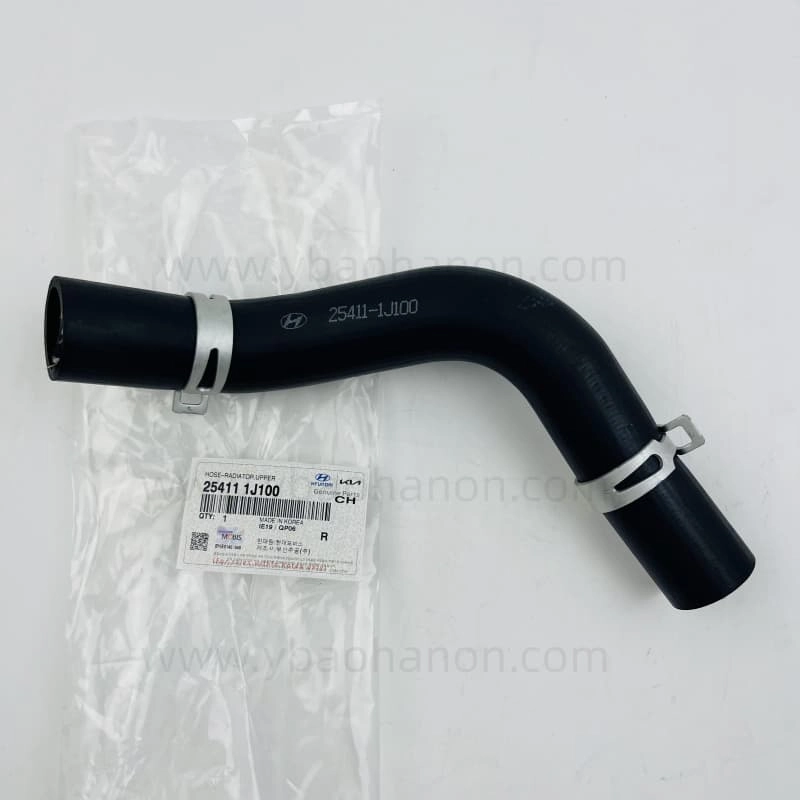
Por qué los materiales premium son importantes para su motor
Usted puede encontrar “ todo ajuste” mangueras en las tiendas cercanas, pero a menudo resultan arriesgadas para su coche. Elegir un intercambio de conjunto como el 25411-1E000 o 25411-1J100 asegura que la manguera tome los niveles de empuje establecidos de su parte de enfriamiento.
El poder del caucho EPDM
Las mangueras fuertes se basan en EPDM, abreviatura de Ethylene Propylene Diene Monomer. Este caucho artificial se hace para combatir el calor, los efectos del aire y los cambios climáticos. A diferencia de los picks de PVC de bajo costo, el EPDM se mantiene doblado a menos 40 grados C y mantiene la forma a 150 grados C. Cuando se ajusta un nivel profesional 25411-1E000, se agrega una pieza que se alinea con las primeras reglas de fábrica.
Fuerza reforzada
Dentro de los lados de caucho de un buen 25411-1J100 o 25411-1E000, se sienta una capa de tela tejida. Este marco interno permite que la manguera crezca un poco a medida que el fluido se calienta sin rasgarse. Los artículos bajos después de la compra a menudo reducen este soporte, lo que trae los problemas de hinchazón de los que hablamos antes.
Cómo garantizar una instalación libre de fugas
Cambiar sus posiciones 25411-1E000 es un trabajo fácil, sin embargo, necesita seguir algunos pasos claros para saltarse los errores habituales.
Comience por nunca levantar la parte superior del radiador cuando el motor se caliente. Después de que la instalación se enfríe, vierta el líquido en un cubo limpio. Al quitarse el viejo 25411-1E000, mire las juntas duras o metálicas en el radiador. Si la oxidación los cubre, limpiarlos antes de empujar la manguera nueva en su lugar.
Recoger soportes frescos también cuenta como una elección sabia. Los soportes de tracción constante superan a los de torsión ya que cambian a medida que el 25411-1J100 o 25411-1E000 crece con calor. Después del montaje, llene la configuración de nuevo y empuje el aire fuera de los caminos para detener las trampas de aire, que conducen a subidas de calor puntuales.
Conclusión: Proteja su motor con soluciones fiables
Su motor’ El bienestar se vincula al flujo de líquido. Al observar su 25411-1E000 en busca de indicios de desgaste y seleccionar intercambios fuertes como el 25411-1J100, evita que las reparaciones menores se conviertan en grandes reparaciones de motores. Una sólida configuración de enfriamiento sirve como la cubierta superior que puede obtener para su coche, manteniéndolo funcionando sin problemas durante los próximos años.
Obtener una cotización & Servicio Profesional
Si busca grandes cantidades o necesita ayuda para elegir la mejor manguera para su grupo de coches, la ayuda profesional está a un clic de usted. Nuestro equipo ofrece soporte especial para cada pieza de refrigeración, asegurándose de obtener artículos que alcanzan o superan los niveles de fábrica. Sabemos lo clave que es tener piezas que duren, por lo que nos centramos en la calidad de principio a fin.
Consultas a granel: fijamos precios justos para los vendedores y arreglamos lugares en todo el mundo, ayudándole a ahorrar mientras obtiene los mejores productos.
Soporte técnico: Si se pregunta acerca de un 25411-1E000 o un 25411-1J100, nuestro grupo puede igualar los datos de su coche para un ajuste seguro que funciona sin fallas.
Contacta con nosotros hoy a través de nuestro sitio para bloquear las piezas de refrigeración superiores para su trabajo o su propio coche, y ver cómo hacemos las cosas fáciles para usted.
Preguntas frecuentes
P: ¿Puedo usar el 25411-1E000 y el 25411-1J100 de forma intercambiable?
R: No. A pesar de que se unen al mismo grupo de mangueras de radiador, sus formas y tamaños varían para adaptarse a diferentes espacios del motor. Manténgase en el número correcto para su coche’ s año y tipo para saltar tirar de las juntas del radiador.
P: ¿Con qué frecuencia debo reemplazar mis mangueras de radiador?
R: La mayoría de los profesionales sugieren comprobar sus mangueras cada año y cambiarlas después de 50.000 a 100.000 millas. Sin embargo, si ve hinchazón, goteo o manchas rígidas en su 25411-1E000, cambie de inmediato sin importar las millas recorridas.
P: ¿Qué causa que una manguera de radiador como el 25411-1E000 se colapse?
R: Una manguera plegada proviene de la parte de enfriamiento que hace un espacio de tracción. Esto se debe a menudo a una mala parte superior del radiador que bloquea el líquido de vuelta del tanque extra, o el lado de la manguera se vuelve demasiado frágil para combatir la bomba. S dibuja.


